Stop releasing on hope. Install a reliable delivery system.
We integrate Jenkins or GitHub Actions, Docker, Registry, Kubernetes, Argo Rollouts, Terraform and Feature Flags into one delivery operating system — auditable, reproducible, transferable to your team.
The thesis on one page
Most companies don't lose for lack of talent or ideas. They lose because shipping to production is still fragile. Fast Flow protects the three things that matter: money, time, and team energy — in that order.
Higher frequency
More deploys, same risk
Fewer failures
Change Failure Rate & MTTR down
Traceability
Audit and compliance ready
Energy
Team innovating, not firefighting

As the business grows, delivery complexity outpaces the codebase.
The symptoms are always the same in organizations without a mature flow:
- The build passes, but nobody trusts what reaches production.
- An image is built, but nobody knows exactly which one is running.
- Deploys happen, but observability is thin.
- Something breaks and rollback isn't clear or rehearsed.
- Operations depend on one or two indispensable people.
This is not a team problem. It's a delivery system problem. Until the system is complete, the business pays the same cost every month.
Not loose parts. One integrated system.
Most pitches show disconnected tools. Fast Flow Enterprise presents a single system where every piece has a clear, connected role.

The 4 technical layers, explained for the boardroom
Each layer solves a specific boardroom pain. Here's how we present them live.
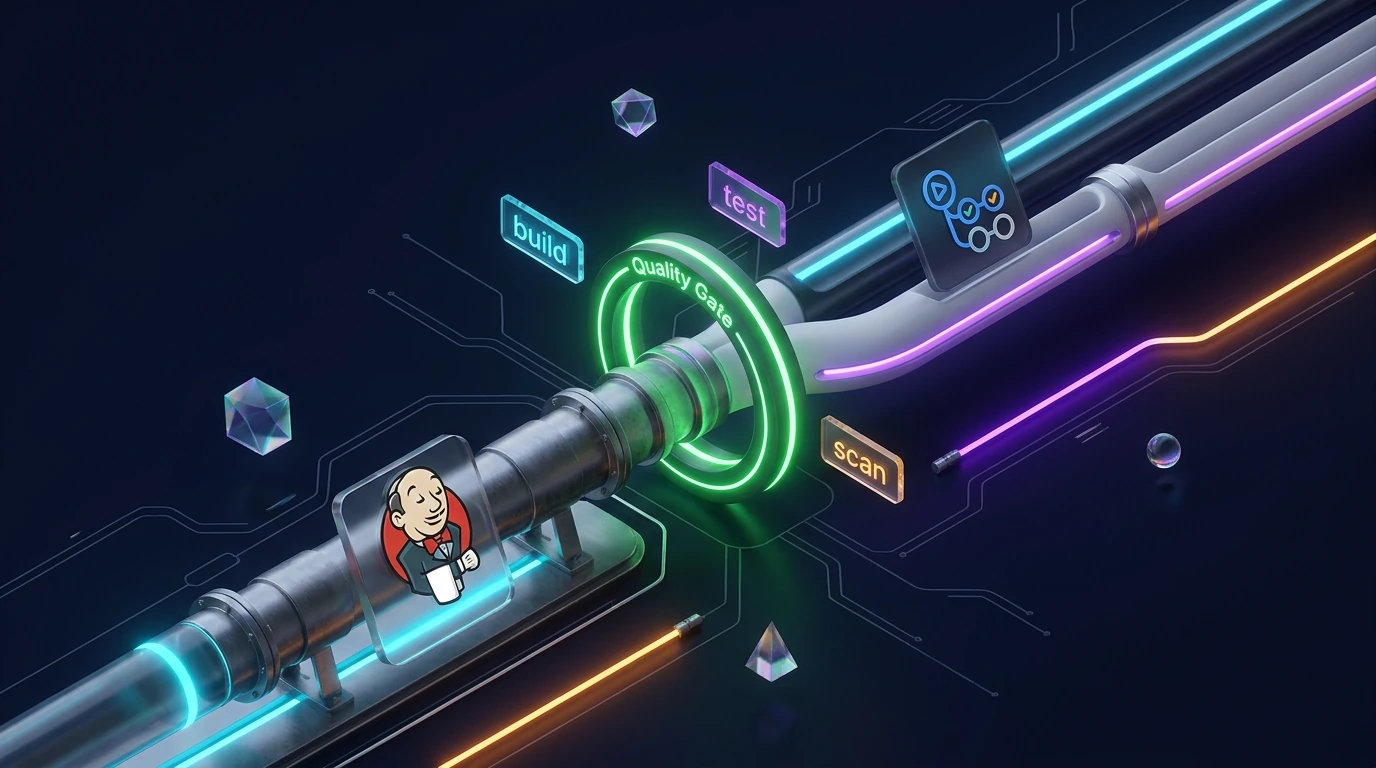
Pipeline: Jenkins or GitHub Actions
We don't force a tool. Jenkins for self-hosted or on-prem compliance. GitHub Actions for speed of adoption if you already live on GitHub. The system logic is the same: pipeline as code, quality gates, traceable promotion.
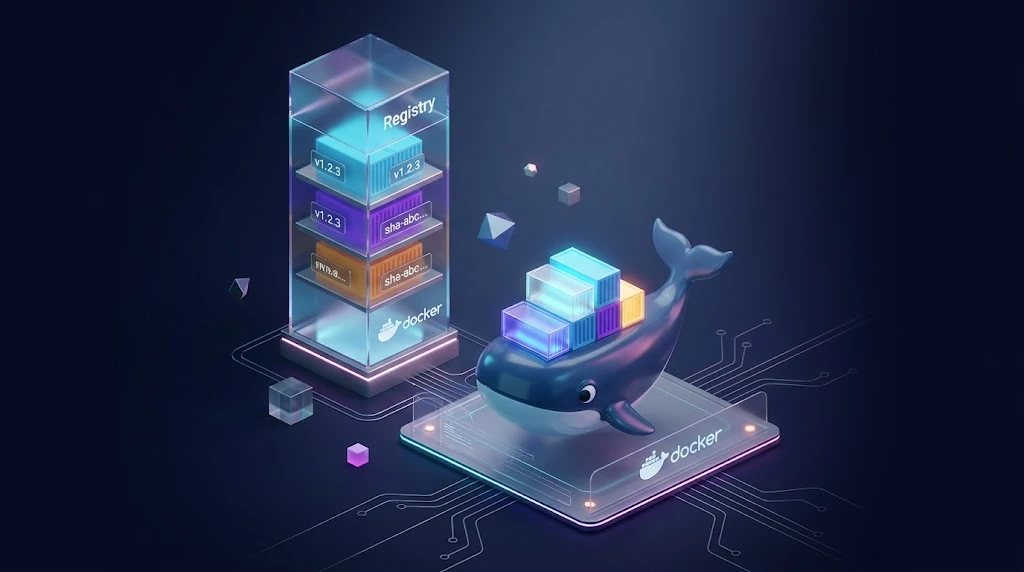
Packaging & governance: Docker + Registry
Many teams think 'doing build' is enough — until an incident hits and nobody can name the artifact running. A well-run Registry delivers version identity, promotion by environment, responsible rollback, audit, and access control.
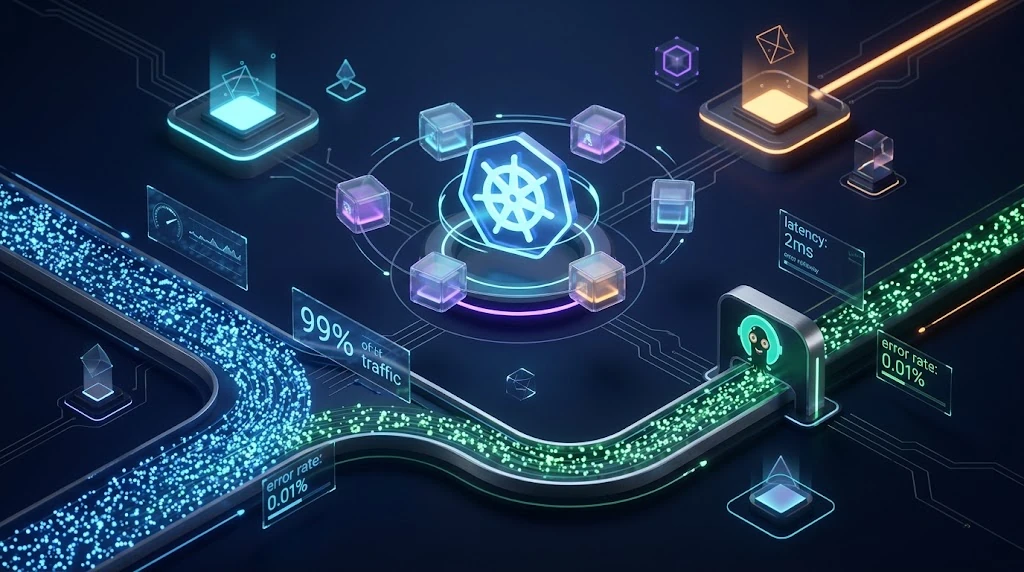
Runtime & release: Kubernetes + Argo Rollouts
Kubernetes standardizes execution. Argo Rollouts changes the game: canary at 1% of traffic, watch latency and errors, advance if KPIs allow. The blast radius of a bad release goes from critical to controlled.
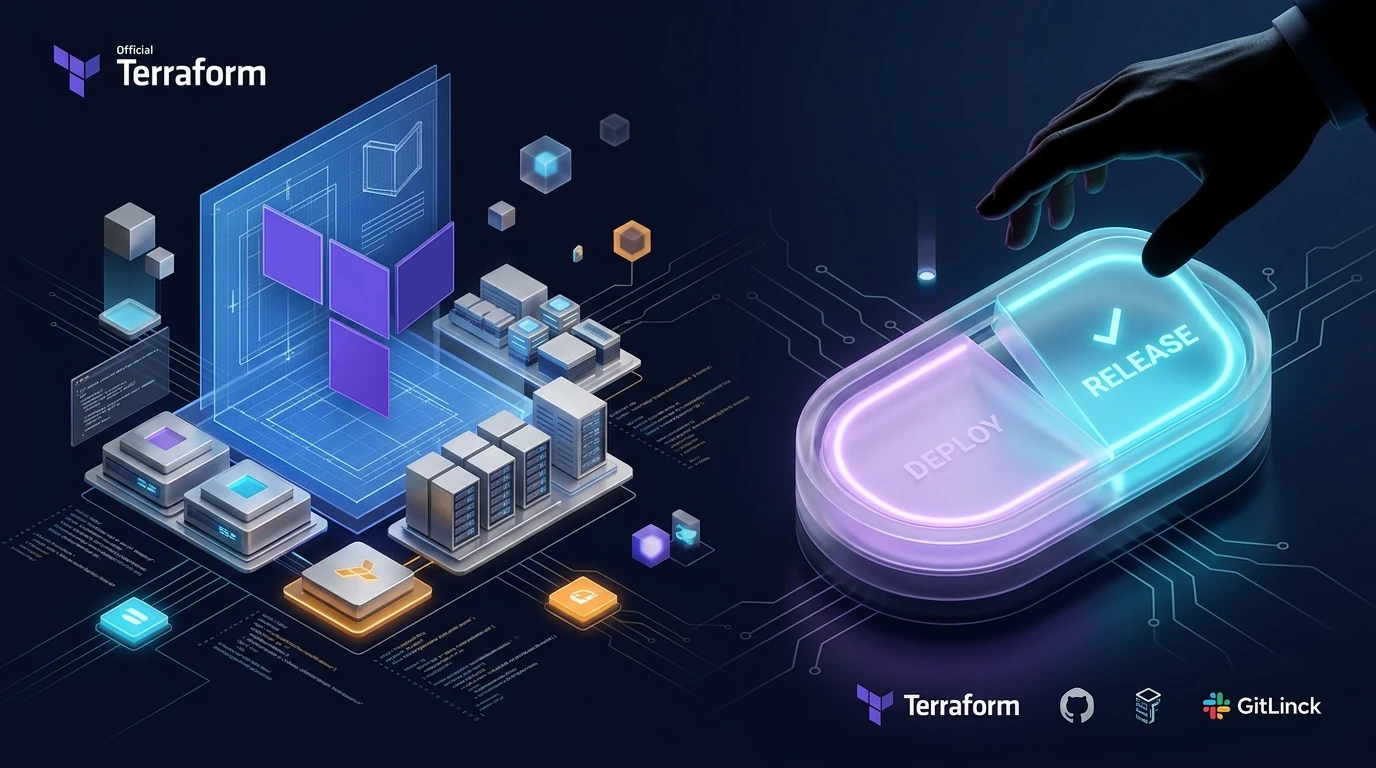
Control: Terraform + Feature Flags
Terraform removes the most dangerous variable: 'nobody remembers how it was set up'. Feature Flags separate deploy from release — code ships when engineering wants; the feature activates when business decides. A/B testing, segment rollouts, kill-switch.
Security isn't a phase. It's part of the flow.
We apply DevSecOps from planning: every change goes through vulnerability scanning, secrets management and strict network policies — without slowing delivery down.
- SAST/DAST in the pipeline, not after.
- Secrets management: never in the code.
- Strict network policies per environment.
- Reviewed IaC (Terraform · CloudFormation).
End-to-end observability with Prometheus, Grafana and OpenTelemetry: metrics, traces and alerts on every release.
What we measure. What the board cares about.
We don't propose faith. We propose measurable evidence with the four DORA metrics, globally recognized.
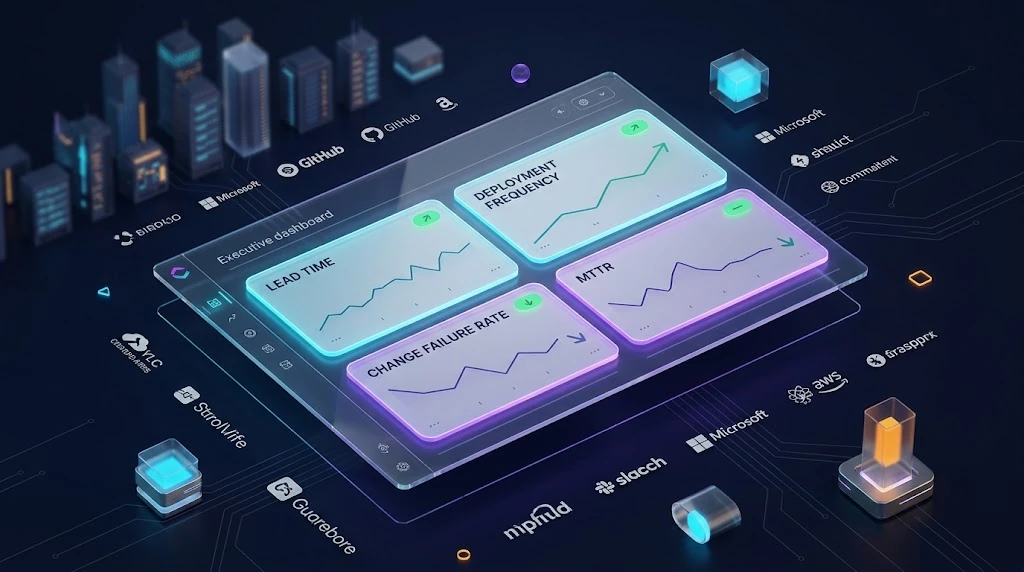
Lead Time for Changes
Commit to production.
Deployment Frequency
Useful deployments per period.
Change Failure Rate
% of deploys that break something.
Mean Time to Recovery
Time to get back to stable.
On top of DORA we add business KPIs: hours in reactive meetings, tech attrition, audit time. Monthly scorecard with trend, root cause and owner.

Rule we respect: if the pilot doesn't move the KPIs, we don't scale. We adjust the hypothesis with evidence. That's also success.
Phased model. We only scale on evidence.
Start small. Measure. Scale when the data says so. Never the other way around.
Level 1 · Pilot Foundation
4 to 6 weeks
Validate the mechanism on a critical service.
Baseline on 4 KPIs + demonstrable improvement.
Level 2 · Core Rollout
2 to 3 months
Extend to critical services. Standardization + runbooks.
Monthly executive scorecard.
Level 3 · Enterprise Scale
3 to 6 months
Turn Fast Flow into multi-team capability.
Institutionalized continuous improvement.

The next step takes 20 minutes.
If your organization feels it works harder each month but ships less real value, the problem isn't effort. It's system.
Book a 20-minute session- 01.Define the pilot service.
- 02.Measure baseline (4 current KPIs).
- 03.Agree on owners and kickoff date.
- 04.Schedule executive review at 4 weeks.